
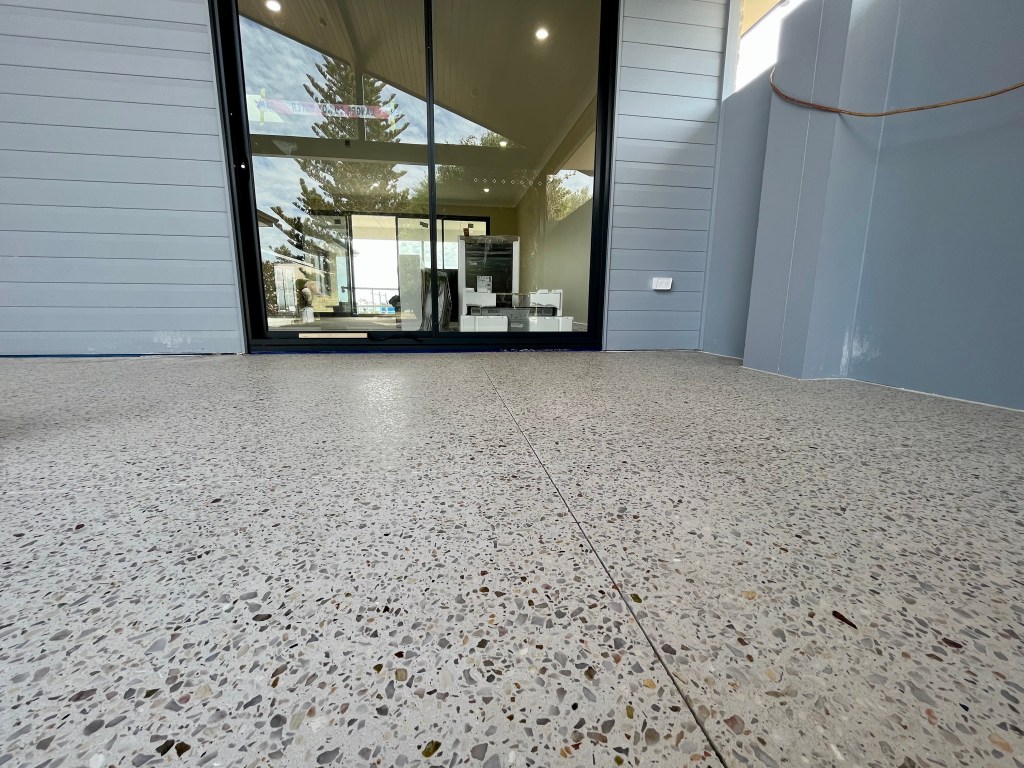
Concrete & Limestone Aftercare Guide
Thank you for choosing Scene Scapes Concrete for your concrete project!
Now that we are finished, the responsibility of caring for and maintaining the surface is passed onto you. Thankfully, the process is simple and straight forward.
While our products are extremely low maintenance when compared to alternative outdoor surface products, you will still need to give it some attention throughout the year.
Your Sealed Surface
During our process a sealer has been applied to the surface. We use specialised sealers which provide many benefits.
The main point of our sealer is to reduce staining from elements and chemicals, but it also reduces the amount of moisture that moves through the concrete, enhances the colour of the concrete and reduces discolouration through weathering.
While our sealers work fantastically, they are not bullet proof. Harsh chemicals and debris can pass through the sealer if left for long periods of time, so be sure to tackle these elements sooner rather than later.
Standard Care and Maintenance
There are some steps you can take on a regular basis to keep your concrete free of contaminants and reduce your time spent later down the track and the overall costs of maintaining your concrete.
Keep your surface free of dirt, staining leaves and debris, and harsh elements. Dirty water is notorious for quickly settling into the sealer, making it harder to remove. Regular light sweeping, leaf blowing and hosing down will ensure these risky items are removed quickly from the surface.
Your enviroment will contribute largly to how often you are required to lightly clean the surface. To help keep other elements in your landscape at bay, we have a few tips for the design and layout of your space.
- Install and keep your grass and garden beds below the top of the concrete. This will reduce the amount of debris that is moved onto the surface by wind and rain.
- Place a tray underneath pots which leak water. This will help prevent dirty water settling into the concrete. If possible, place spacers between the pot and the concrete, allowing you to clean underneath the pots easily without removing them from the area.
- When moving furniture across the surface, try to use a carpet or board to move across.
Mopping is also an option for Honed and Architectural Concrete surfaces.
Stubborn Stains
No matter how thorough you are with your practises, stubborn stains may appear and are completely normal. A ph neutral surface cleaning agent should be your first strategy, apply to the surface and scrub if necesary. Ensure to wash the product completely off the concrete. Acid based cleaning products have a very real ability to permanately damage your concrete.
It may also help to use a household electric pressure washer on tough stains.
Should a particularly tough stain persist, you can use a very light Hydrochloric Acid wash to tackle the culprit. Start off with a 1:20 mix with water, apply to the surface, allow to sit for 30 seconds and then neutralise. Scrub and wash off the neutralised solution. You should notice a difference after this, simply repeat until the stain is removed.
If a stain still does not want to budge, it is time to come up with a real strategy, research what caused the stain and what will be best to remove it. Always ensure you are properly educated and correctly protected. You can always get in touch with us to provide some advise.
Sealer
The sealer is the most important part of protecting your concrete. During our process typically two coats of a high quality sealer is applied to the concrete, these protect the concrete from staining by harsh elements, as well as damage from saturation of water and sunlight.
Sealer does wear away over time, the more exposed to heavy traffic and elements, the quicker it will wear. We recommend resealing your concrete to our guidelines to help ensure the concrete is protected and does not lose its colour and shine.
Resealing Guide
While these guidelines aim to give an average time in which it is most beneficial to seal your concrete, we cannot predict exactly how long the sealer will last. To identify if your concrete sealer is starting to wear away, there are a few methods to use.
How to know when your sealer is wearing.
You may notice your concrete has become dull in some or all sections, because we typically use a colour enhancing high gloss sealer, this will enrich the colour and give a nice shine to the concrete in sunlight. If you notice these factors beginning to fade, it may be time to apply new sealer to the surface.
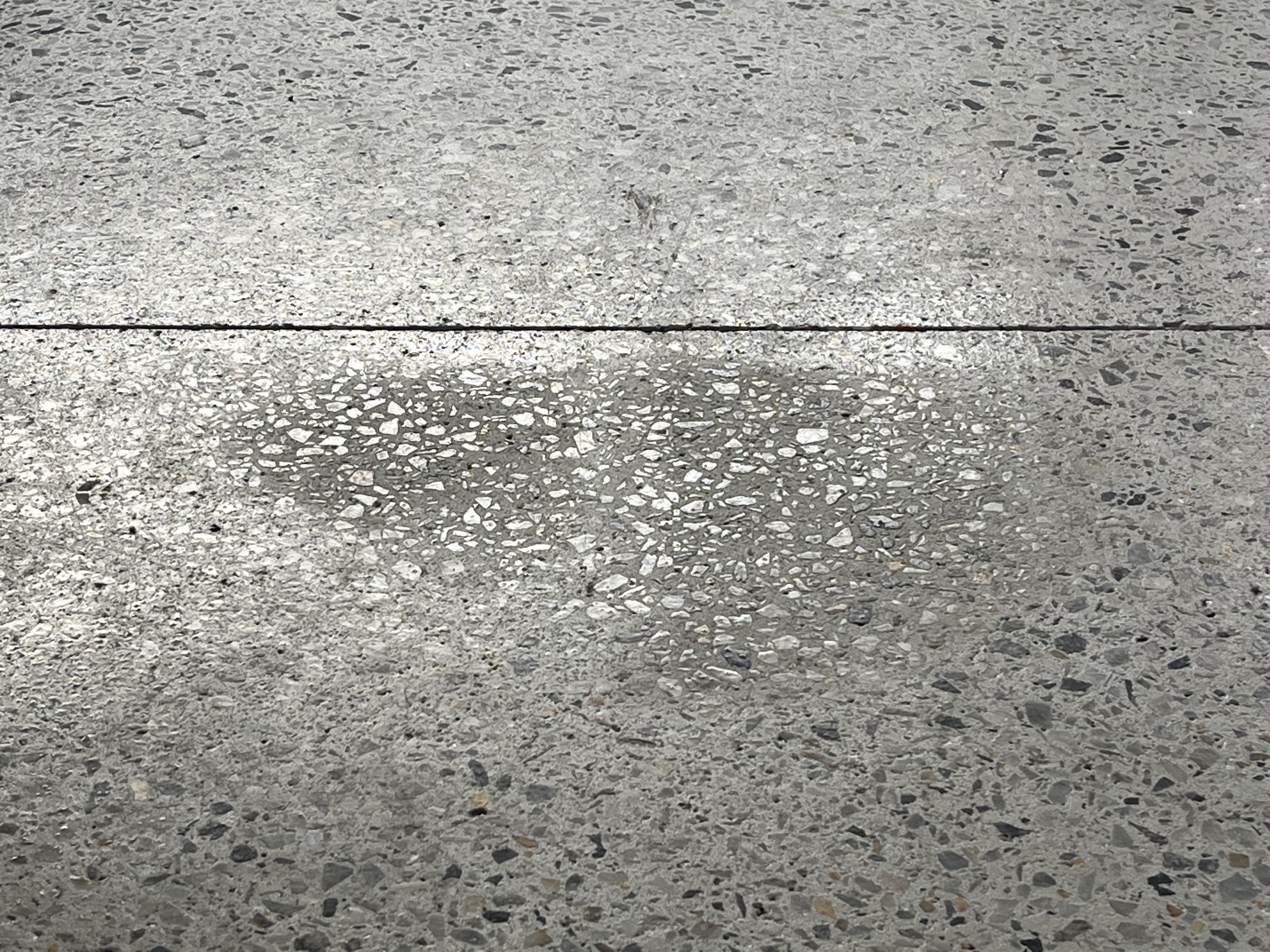
Our sealers also repel water from being absorbed into the concrete from the surface, apply a bit of water to an area, allow it to sit for 5 minutes, then observe. If the concrete has darkened, the water is moving past the sealer and it may be time for a re seal.
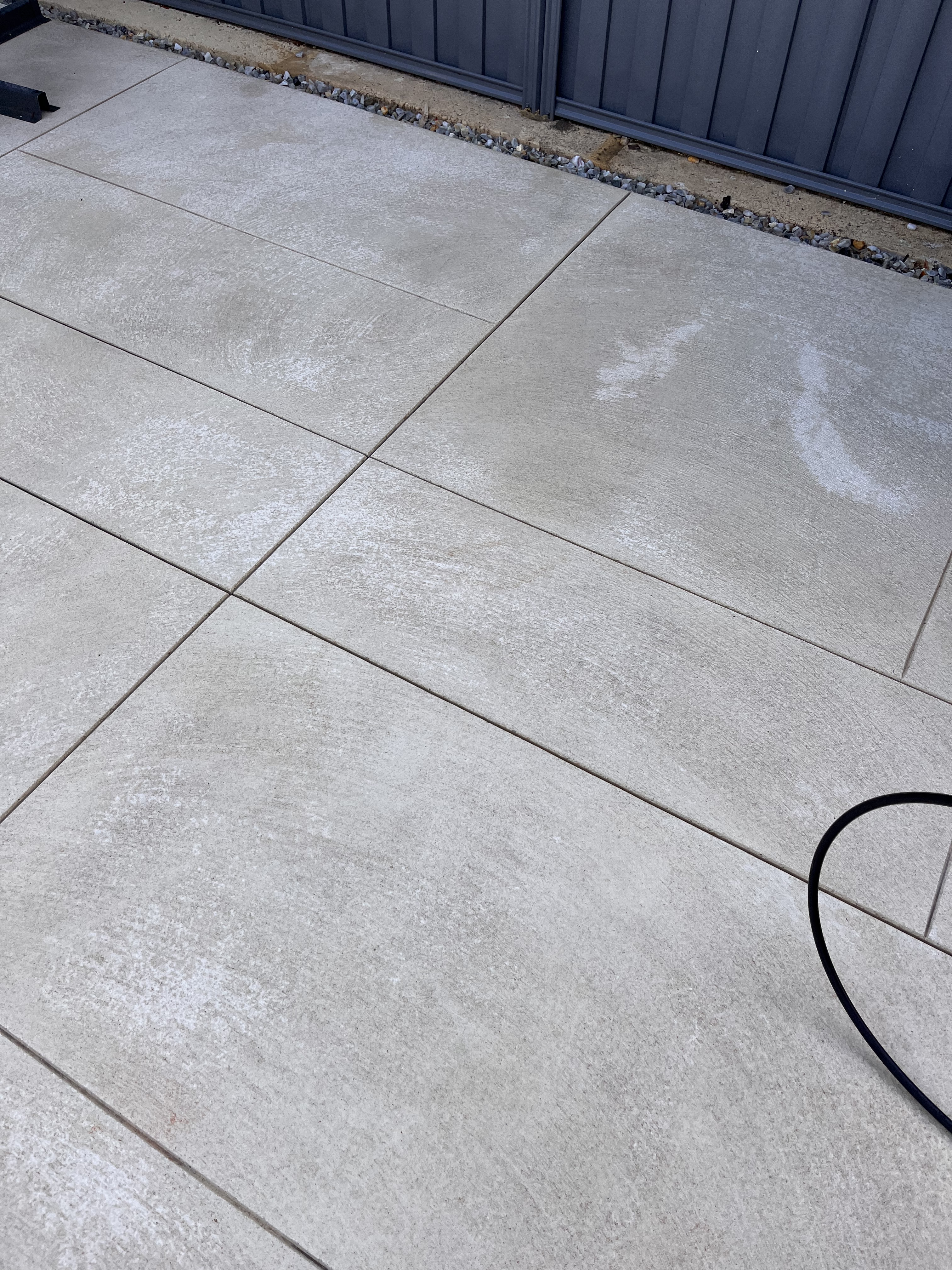
Exposed Aggregate, Semi Honed Aggregate: First reseal should be completed between 18 months to 2 years after completion, followed by every 2-3 years afterwards as necessary. 2 coats of high quality, high gloss solvent based sealer should be used.
Honed Aggregate, Architectural Concrete: First reseal should be completed between 12-18 months after completion, followed by every 1-2 years afterwards as necessary. 2 coats of high quality, high or low gloss solvent based sealer should be used, a matte sealer can also be used but this will reduce the shine of the surface, a suitable non-slip additive can be mixed into the sealer.
Liquid Limestone, Coloured Concrete and Grey Concrete: First reseal should be completed 12-18 months after completion, followed by every 1-2 years afterward as necessary. 1-2 coats of a high quality water or solvent based sealer should be used, when around a pool a suitable non slip additive should be mixed into the sealer.
 Scene Scapes Concrete